As the first person in my family to attend university and earn a degree, I have always viewed education not as a given, but as a hard-won privilege. This series of posters serves as a visual inquiry into the systemic barriers that prevent millions of children, particularly girls, from exercising their right to learn. By combining raw data with evocative imagery, I aimed to move the conversation from abstract statistics to human realities.
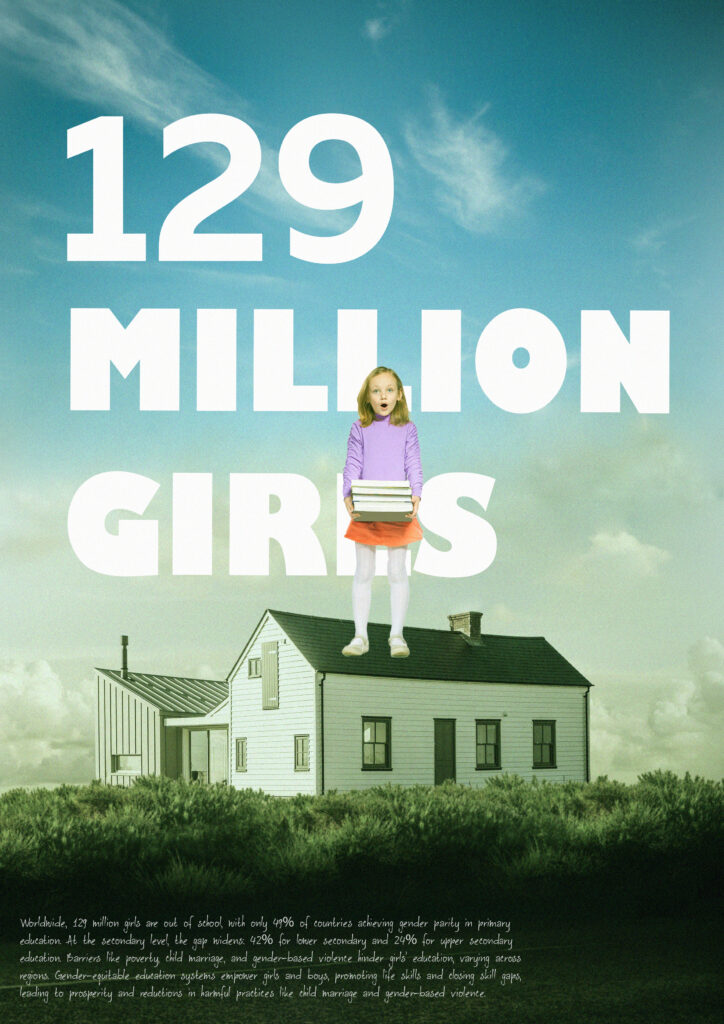
129 Million Girls
Focusing specifically on gender-based inequality, this poster highlights that 129 million girls are currently denied an education. A young girl standing atop a house, holding a stack of books, represents both her resilience and her precarious position. While she reaches for the sky, the barriers of life remain fixed beneath her.
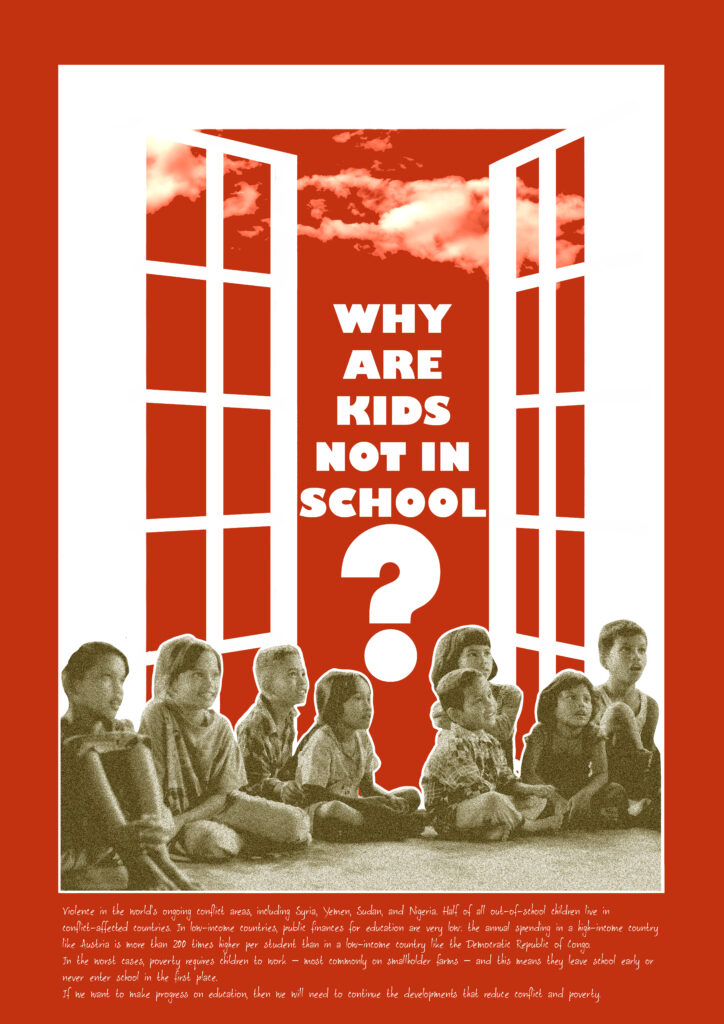
The Structural Why
This poster moves the focus toward conflict and economic instability. The “open window” imagery represents the potential of the outside world, yet the children are seated in a stark, shadowed interior. It emphasizes that for children in poor areas of the world, the “window” of opportunity is often obstructed by the debris of war and poverty.
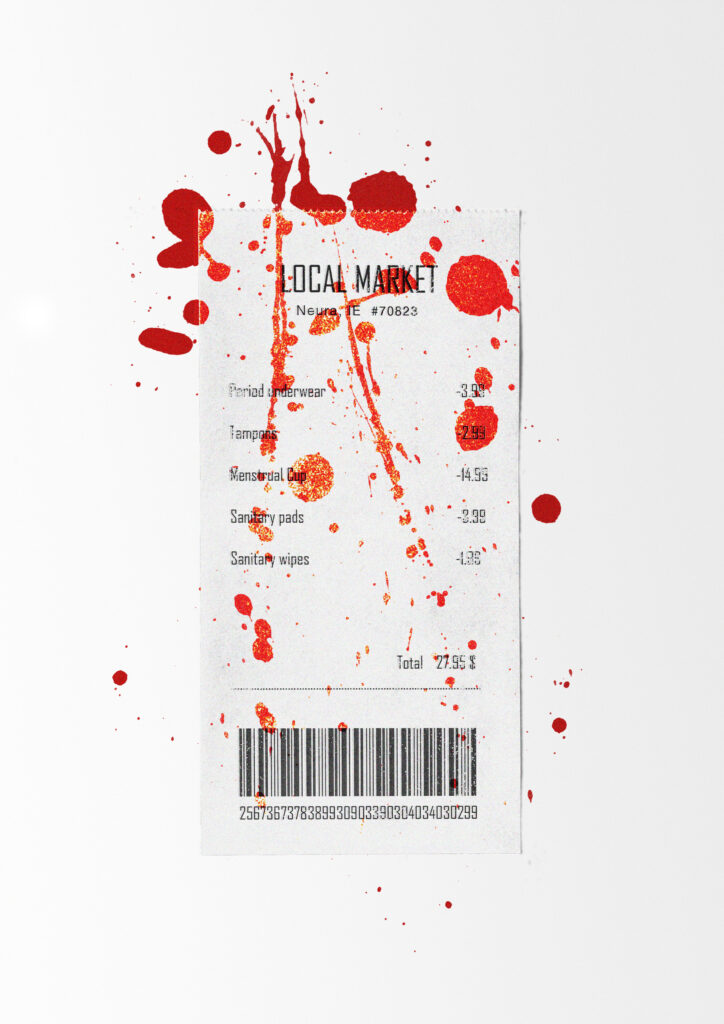
The Cost of Biology
Perhaps the most visceral in the series, this poster addresses period poverty as a direct barrier to education. The grocery receipt lists essential menstrual products splattered with blood-red marks. It highlights the “biological tax” placed on women. For many girls, the choice between buying food and sanitary products is between staying in school and staying home, creating a cycle of absenteeism that leads to dropping out.
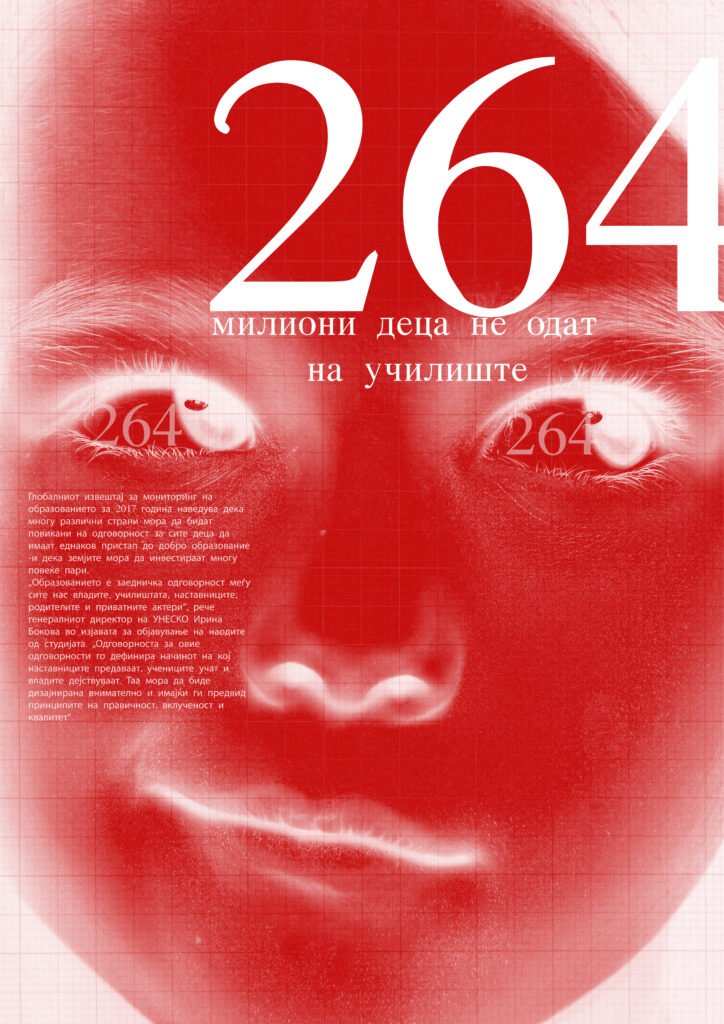
The Face of 264 Million
This piece focuses on the staggering scale of educational exclusion. The number 264 million represents the total population of out-of-school children globally. By overlaying this figure onto a child’s face and using a high-contrast red filter, I wanted to strip away the “anonymity” of big data. The grid-like texture signifies the structural, almost clinical way society often tracks these children without actually seeing them.